EV road trips, minus the myths: Meridian talks with a Kiwi EV enthusiast
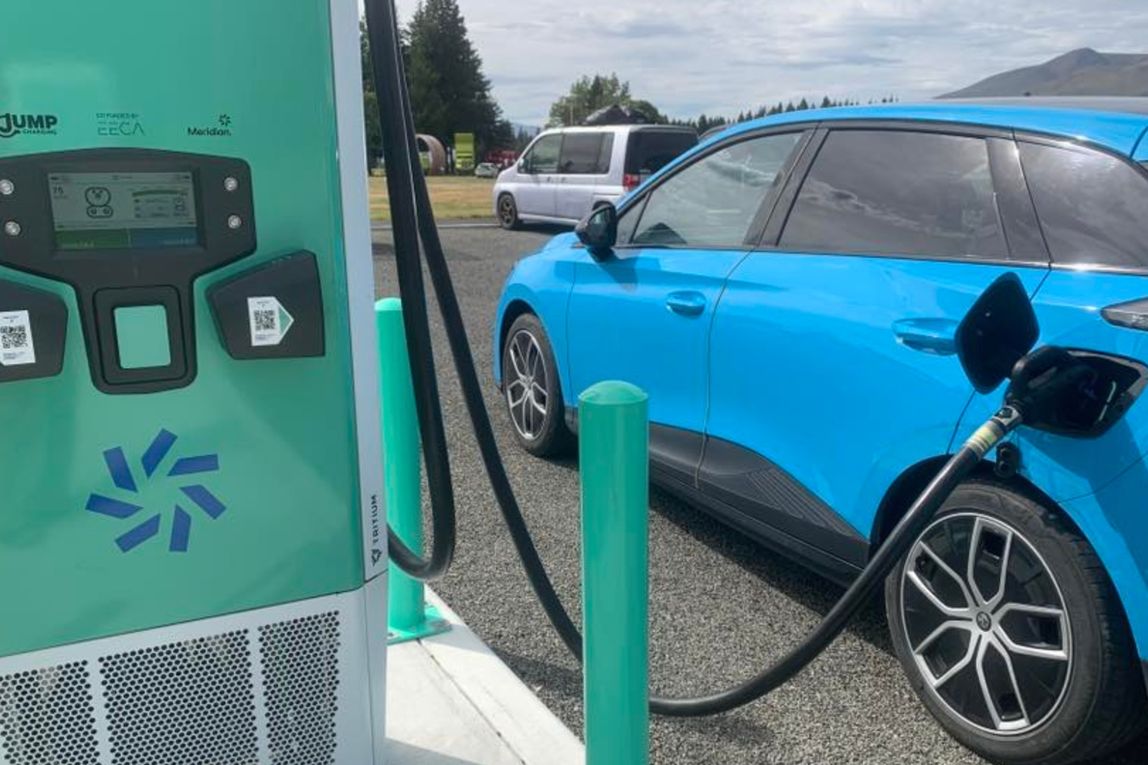
Some people talk about EV road trips like they’re a future thing. Rob McCaw treats them like a normal part of life.
Rob is based in Picton, retired after a long career in local government, and has been driving electric since 2019. He started with a Hyundai Ioniq and now drives an MG4. Over the years he has done enough long distance travel to see the shift from careful early adopter planning to something closer to a relaxed, go where you feel like kind of roadie.
He also has the kind of practical energy mindset that comes from living with solar at home. He tracks what his household uses, what it generates and how his EV fits into the bigger picture.
His take is simple. EV road trips are already very doable and they’re getting easier. The only real change is you learn how to think about charging as part of your normal stops, not as a separate chore.
How Rob ended up behind the wheel of an EV
Rob’s move to electric came from a mix of values and timing. He’d been aware of early EVs for a while, but he wanted something that suited longer distance travel.
“When the Ioniq first came on the scene we bought an ex demo one,” says Rob. “Back then you really had to do some serious planning.”
Rather than relying on marketing claims, he did what a lot of smart EV buyers do. He asked real owners.
“I used PlugShare to see people that had checked in locally, then I emailed a few of them that had Ioniqs,” says Rob. “One of them rang me almost immediately and spent a couple of hours on the phone telling me why I should.”
That combination of community knowledge and a car with better range set him up for the road trips that followed!
Why range anxiety fades faster than people think
Rob has heard every variation of the range anxiety argument. His experience is that it’s real, but short lived.
“Everybody talks about range anxiety that lasts for maybe a month or two, till after your first couple of trips,” says Rob.
After that, it becomes more about being sensible than being scared. He plans with a buffer and assumes less than the brochure range.
“The MG is advertised as 430 km. I rely on 350 and then plan on 300.”
That does two things. It keeps the stress down and it gives you flexibility when plans change.
His best example of what range anxiety becomes over time is almost funny. It stops being worry and turns into a preference.
“I’ve changed from range anxiety to where’s the fastest charger!”
That’s a very normal shift. Once you trust the car, you start optimising for convenience rather than survival.
The mindset shift that makes EV road trips feel easy
Rob’s view is that EV road trips are not hard, but they reward a small change in thinking.
“You do a bit of planning,” says Rob, in the same tone you would use about checking the weather before heading over an alpine pass.
He suggests using A Better Route Planner as a starting point, even if you don’t follow it perfectly.
“You can put your vehicle in. I always put in a much higher consumption figure than I know it will use. A bit of a safety figure. Then I look at that and say, okay, it says I can just do that trip. I know I can do it easy.”
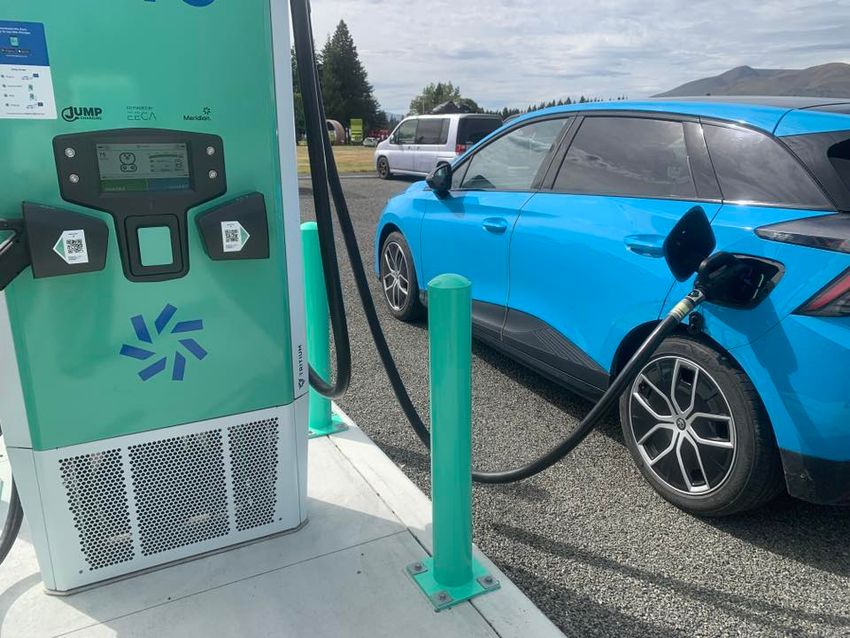
The bigger shift is to stop thinking of charging as a big event. Most road trips already include breaks. Coffee, lunch, and a look around a town you have driven past a dozen times.
“People stop for coffee. They definitely stop for lunch. There are a few that get in a car and drive 500 km non stop, but there’s not many. And to be perfectly frank, it’s not a safe way to be driving.”
If you already stop, the EV just gives your break a second job.
Why small top ups save time overall
Rob has a simple rule he repeats to new EV owners, borrowed from an overseas EV reviewer.
“ABC, always be charging,” says Rob.
That doesn’t mean charging to 100% every time. It means taking small top ups when the opportunity is there. A quick plug in while you grab a coffee or while your travel companions want to look around a town.
Even if you only add 10%, it buys you options later. A detour. A closed road. A charger that’s occupied.
“It gives you more options down the road if something happens.”
It can also reduce the total time you spend charging across a trip, because you’re avoiding the slow part of the battery curve.
“If you’re charging between 20 and 70 or 80%, you’ll end up spending less time at a charger. You might only be there five to ten minutes each time, but it will add up in less time than running right down and sitting there and going right back up to 80 or 90.”
In other words, a few quick stops can be faster than one long stop.
Why EV road trips can feel more relaxed than petrol ones
Rob says almost every EV owner he knows reports the same thing. Long distance driving feels calmer.
“Every EV driver I’ve met says the same,” says Rob. “You feel far more relaxed driving an EV. I think it’s because you’re getting out every couple hundred km and having a brief break, you’re not pushing yourself forward all the time.”
That’s an underrated benefit. It turns the road trip into a series of comfortable legs, rather than one long push to the destination.
It also changes how you drive. When you care about efficiency, you tend to drive a little more smoothly. You look further ahead. You ease off earlier. You make better use of regenerative braking.
“I think they make you a better driver because if you’re thinking about your range, you’re driving more defensively.”
And if you do get stuck in slow traffic, the EV is not burning fuel to sit there.
“Just crawling while the car is using nothing, describing road works on the way home to Nelson. Just a little bit for the air con.”
The South Island factor: Hills, regenerative braking and the joy of the drive
South Island driving is where EVs start to show their personality.
Rob has owned two very different EVs. The Ioniq is efficient and has a coast mode that allows him to choose how much regenerative braking to use. The MG4 is rear wheel drive with punchy acceleration and a very different feel on a winding road.
“Put it on a narrow windy road and you haven’t got the boss in the car with you, it’s like being back in the rally car,” says Rob.
On the practical side, regenerative braking pays you back on long descents.
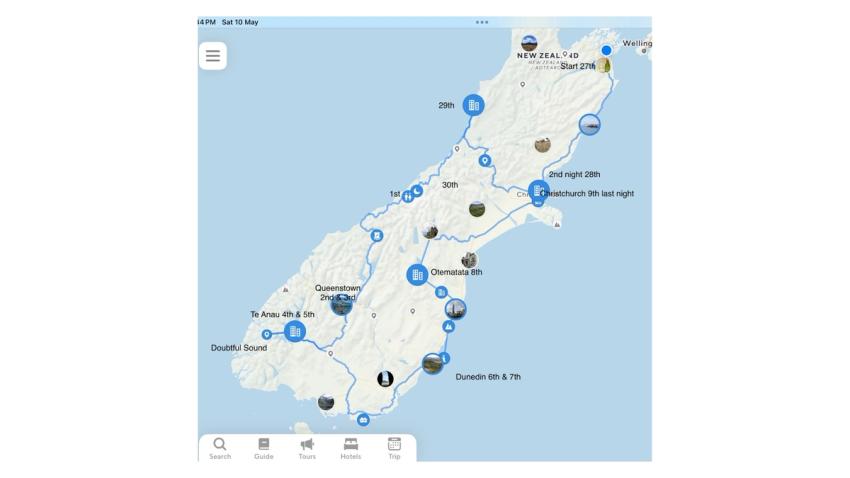
“When we come over the Tākaka Hill, we lose a little bit of range going over, but we always end up having more range than the distance we’ve travelled when we get to the bottom. I just drive it on the paddles when I’m coming down the hill. Hardly ever touch the brake pedal.”
He even notices it in the numbers.
“We put 12 km back on the range coming down,” he says.
What really affects range on a road trip
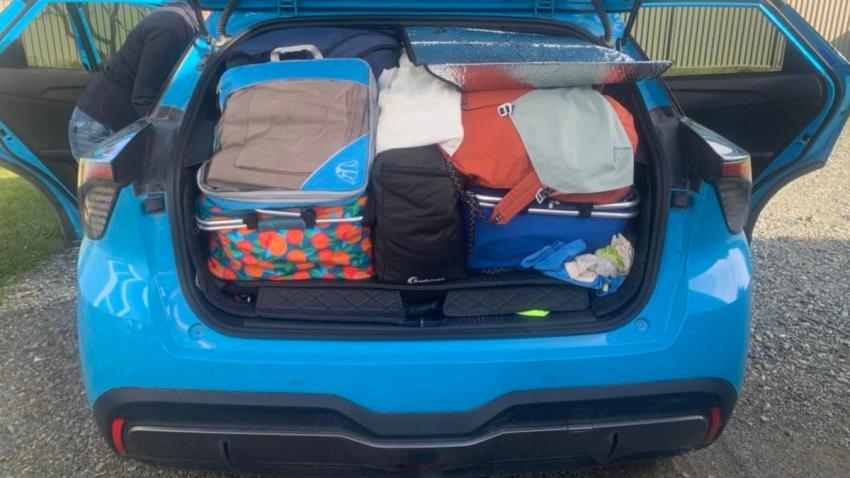
People often assume the biggest factor is how much luggage you have. Rob’s experience is that loading matters less than you might think and other factors matter more.
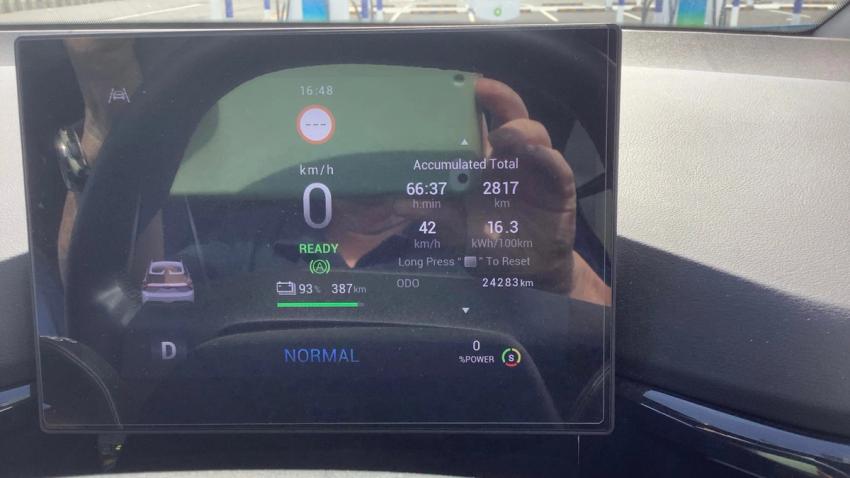
“We had that car loaded to the gills,” says Rob, describing a trip with overseas visitors and suitcases packed in. “It averaged 16.3 kWh per 100 km, which is actually quite good for it.”
For him, wind and speed are the big variables.
“Wind affects it way more than anything else and your speed once you’re over 90 km.”
That’s where EV road trips become a gentle nudge toward safer, steadier driving. If you’re cruising at the limit rather than pushing it, you’ll usually get noticeably better efficiency. And that creates a nice loop. Better efficiency means fewer charging constraints, which makes the trip feel simpler, which makes the EV feel more normal.
Charging etiquette from someone who uses public chargers a lot
Rob’s etiquette rules are not complicated. They’re just considerate.
“Don’t leave your car sitting on the charger when you’re finished,” says Rob.
He keeps a simple system for accountability. If he’s leaving the car nearby while it charges, he makes it easy for someone to contact him.
“I have a card that I leave in the window if I’m not at the car.”
He also uses app notifications so he knows when the car is near the level he wants and can move it when it’s time.
“It’s not hard to be responsible about it!”
The other etiquette piece is about charging past 80% on a busy charger when you don’t need it. Rob frames this in a way that lands well with new owners.
“You’re wasting your own time.”
He isn’t being precious about rules. He’s pointing out that the slow charging curve above 80% is inefficient for you and inconvenient for others. Most of the time, you’ll get back on the road faster if you charge to a sensible level, then top up again later during another stop.
Keeping charging simple when travelling
Rob isn’t interested in making charging feel fiddly. He wants it to feel like a normal part of travel.
The best principle he comes back to is optionality. Keep some buffer. Take top ups when it’s easy. Avoid arriving on very low battery unless your confident there’s a charger ready to go.
“If you’re travelling somewhere and there’s a series of only one charger, keep yourself topped up in case one of them fails or there’s a long wait,” says Rob.
He offers a real example of how that thinking saves the day. He chose to charge a bit higher than usual before heading into a place where queues were possible and it meant he could keep going rather than waiting.
It isn’t dramatic. It’s just good road trip habits, translated into the EV world.
Why Rob wouldn’t go back to petrol
Even with the changes to costs over time, Rob’s personal view is clear.
“You wouldn’t get me to go back to petrol,” says Rob.
Part of it’s the driving feel. Smooth, instant response, easier overtakes and less noise. Part of it’s the daily convenience of charging at home.
“I spend less time charging now than I did visiting the petrol station.” Most of the time I just walk outside, plug the thing in, turn the switch on and come back inside.”
And part of it’s the bigger energy picture. Rob sees EVs as one piece of a household system, especially when you add solar.
With rooftop solar, he looks at the payback like an investment return, not a vague promise.
“Once we got the EVs, we’re returning more than 10% on that $20,000. Our house and our transport, t’s not much.”
That combination is what makes EV road trips feel like they are part of a wider shift, not a niche hobby.
A simple road trip takeaway for first timers
If you boil Rob’s advice down, it’s this.
Plan lightly, not obsessively. Keep a buffer. Charge while you’re already stopped. Don’t chase 100%. Move when you’re done. Drive smoothly, especially in the wind and at higher speeds. And after your first couple of trips, trust that the anxiety part fades.
As Rob puts it, “it’s just common sense really!”