Is an EV a good family car? What two years of real life tells us

For many families weighing up their next vehicle, the question isn't really whether electric vehicles are the future. It's whether they work right now, for school runs, weekend adventures, a boot full of sports gear, and the occasional escape somewhere properly off the beaten track.
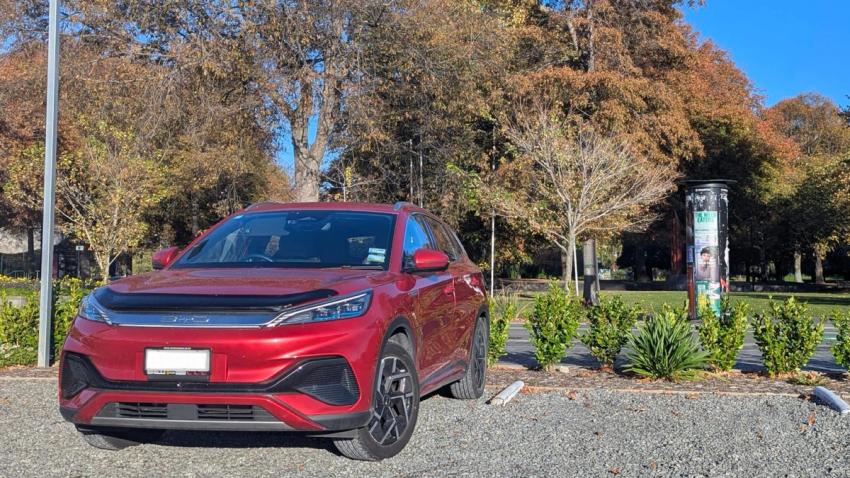
Irina Ermeneanu, a Meridian Energy staff member and solo mum of two, has been driving a BYD Atto as her family's only vehicle for nearly two years. Her experience cuts through a lot of the noise that still surrounds EV ownership in New Zealand.
Range anxiety is real, and then it isn't
Almost everyone who switches to an EV goes through a version of the same thing. The fear of being stranded somewhere without charge feels significant before you've lived with the car. For families who love getting out into New Zealand's more remote corners, that anxiety can feel especially pointed.
"It was always the fear of what if I end up somewhere and we don't have anywhere to charge," says Irina. "New Zealand is all about being remote. We love to explore the outdoors, we love tramping, and we often drive to locations that are off the beaten path."
For Irina, switching to electric was never really in question. She'd already committed to solar at home and saw the EV as part of the same picture. But she was honest about needing to change her habits around how she'd "fill up the car."
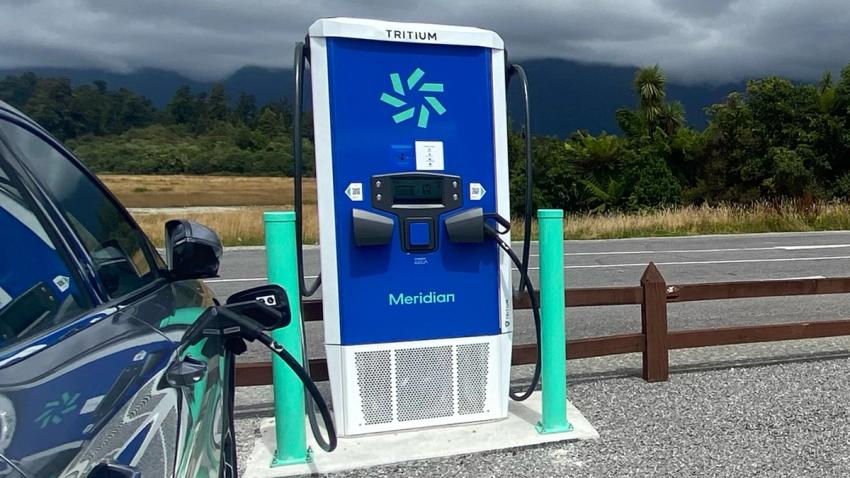
That adjustment took around six months. Going through a few genuine moments of low charge in remote areas, and coming out fine, was what settled things.
"There were moments where I was on 20% in the middle of nowhere, going, am I going to have enough to get back out? But going through those instances and seeing that you can trust the numbers, those anxious thoughts kind of go away. Now it's just become second nature."
The shift in perspective runs deeper than just getting comfortable with the technology. Irina describes a sense of security that comes from not being tied to petrol infrastructure at all. Reading about fuel shortages and supply disruptions, she says, now feels like someone else's problem.
What a real week looks like
As a solo parent, Irina's EV gets a solid workout. School drop-offs and pick-ups, a lunchtime gym run, evening supermarket trips — the kind of relentless, fragmented driving that typifies family life.
Home charging handles almost all of it. For day-to-day use, public charging rarely comes into it. The cost advantage of charging at home makes the maths straightforward, and the routine of plugging in overnight quickly becomes as unremarkable as charging a phone. According to EECA's EV charging survey, 97% of EV owners in New Zealand charge at home at least some of the time, and 80% do more than half their charging there.
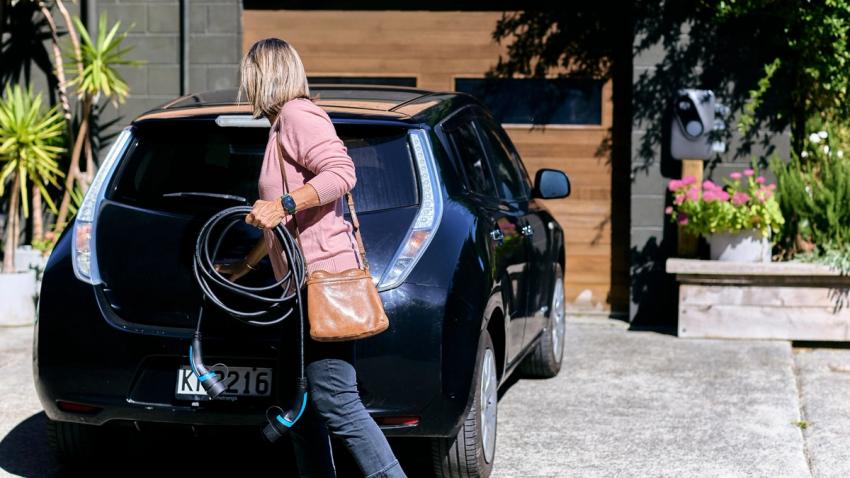
One thing Irina emphasises is the value of investing in a proper home charging installation rather than relying on a standard wall socket.
"If you just do it through a regular outlet, it takes bloody forever and makes it super inconvenient. The investment is what, about $1,000? When you think about the time saved and not waking up with only 20% charge, the ROI on that is a given."
It's a small upfront cost that meaningfully changes the daily experience of EV ownership, and one that's easy to overlook when people are focused on the vehicle price itself.

How longer trips work now
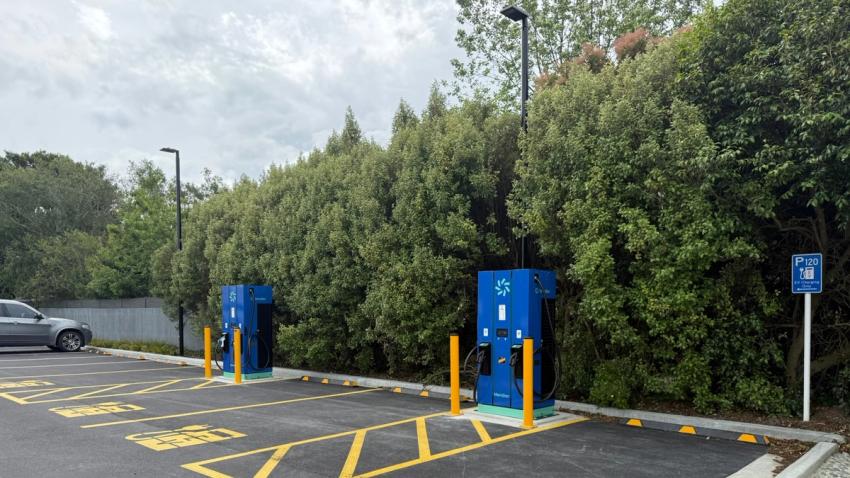
Two years in, the process of planning longer drives with kids in the car looks quite different from those early months of ownership. Irina no longer maps out charging stops in advance. The charging network has filled in enough that she simply watches her battery percentage and looks for the nearest charger when she hits around 30 to 40 percent. EECA's public charger dashboard gives a useful live picture of just how comprehensive that network has become.
"Oh, they're everywhere nowadays. I just think, I'm at 40%, where's the next closest charging spot? And then I try to stop somewhere convenient. If it's lunchtime, I'll pick somewhere with a charger rather than somewhere different."
It's a relaxed, opportunistic approach that would have felt impossible in those first six months of proactive route planning. The change reflects both growing confidence and a genuinely improved charging network.
The myths worth addressing
Irina has heard most of the common hesitations that come up when families consider switching. A few are worth addressing directly.
EVs are a fire risk.
This one comes up more than it should. Research from Australia's EV FireSafe, cited in The Conversation, found the fire risk for petrol and diesel vehicles is between 20 and 80 times greater than for electric vehicles. The data simply doesn't support the concern. EECA confirms that EVs are less likely to catch fire in a crash than petrol or diesel vehicles.
EVs are dangerously quiet around kids.
Irina's take on this is interesting. Rather than making her children less safe, she says the quietness of the car has made them more aware of their surroundings.
"Because they know how quiet it is, they've become more tuned in to what's around them. They understand that some cars are really silent. I think if we'd just had a petrol car, they wouldn't have had that reference point."
It's also worth noting that most modern EVs are now required to emit a warning sound at low speeds - a regulatory response to the pedestrian safety question. Europe has mandated this since 2019, and Australia introduced the same requirement in November 2025, with New Zealand signalling it will follow suit.
A hybrid is a reasonable middle ground.
Irina is direct on this one. A hybrid is, in practice, a petrol car with a small battery. Standard hybrids run on petrol by default and are not electric vehicles as such. If the goal is to genuinely reduce fuel dependence, a full EV is the more effective choice.
The unexpected upsides
Some of what Irina values most about EV ownership wasn't on her radar when she made the switch.
The quietness of the car is one. After driving her parents' old Saab and being struck by how loud it was - how much you have to raise your voice on long trips, she realised how much the noise of a conventional engine is just something people tune out and live with. Her kids noticed the quiet too, and liked it. Wind down the window and you hear what's around you rather than the constant drone of the engine.
Then there's the freedom from petrol station admin. No more scanning prices on the drive home to work out whether to fill up now or wait. No more saving receipts for discount programmes. No more kids angling for a lolly every time you pull in to refuel.
"That constant buzzing in your head, must look out for the price, must save that receipt, it's just gone. I really like that."
It sounds minor. It isn't. The mental overhead of managing petrol costs is something most drivers don't notice until it disappears.
What families should know before switching
For families still weighing things up, Irina's advice is grounded in her own experience rather than evangelism.
Get the home charging installation done properly - it changes everything about the day-to-day convenience. Accept that the first few months will involve some adjustment, the same as you'd experience with any new car. Don't overthink the range question. The infrastructure is there, and the anxiety settles faster than most people expect.
And perhaps most importantly, factor in what you're leaving behind, not just what you're taking on. The savings, the simplicity, and the freedom from petrol infrastructure all add up to something that's hard to fully appreciate until you're living it.
Irina Ermeneanu is an Experience Practice Lead at Meridian Energy.